A useful image prompt does not need to read like technical documentation. It needs to communicate a clear visual idea. The easiest way to do that is to describe a few important decisions in a consistent order.
The six-part prompt formula
- Subject: What is the image about?
- Action or pose: What is happening?
- Style: How should it be rendered?
- Setting: Where does the scene take place?
- Mood and color: How should it feel?
- Composition: How should the image be arranged?
Build the idea one decision at a time
Start with a direct sentence, then add details only when they meaningfully change the result.
A sleepy orange cat reading beside a small window, storybook illustration, cozy evening light, deep blue and warm amber palette, centered square composition.
That prompt communicates the subject, activity, style, light, colors, and layout without burying the central idea.
Use visual language instead of vague praise
Words such as beautiful, amazing, and high quality provide less direction than concrete visual choices. Describe soft paper texture, dramatic side lighting, limited colors, clean geometric shapes, or loose painted edges.
Design for the selected product
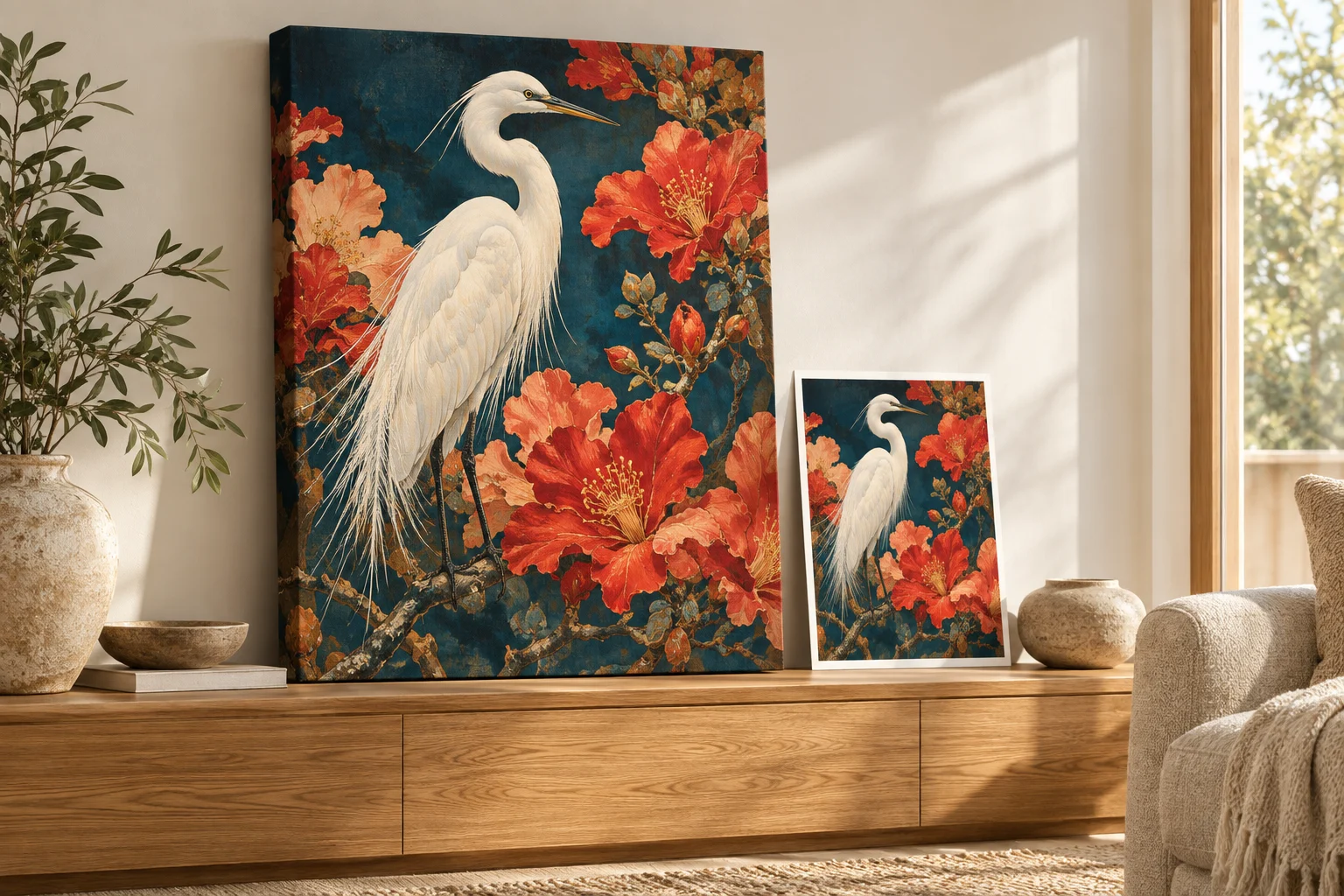
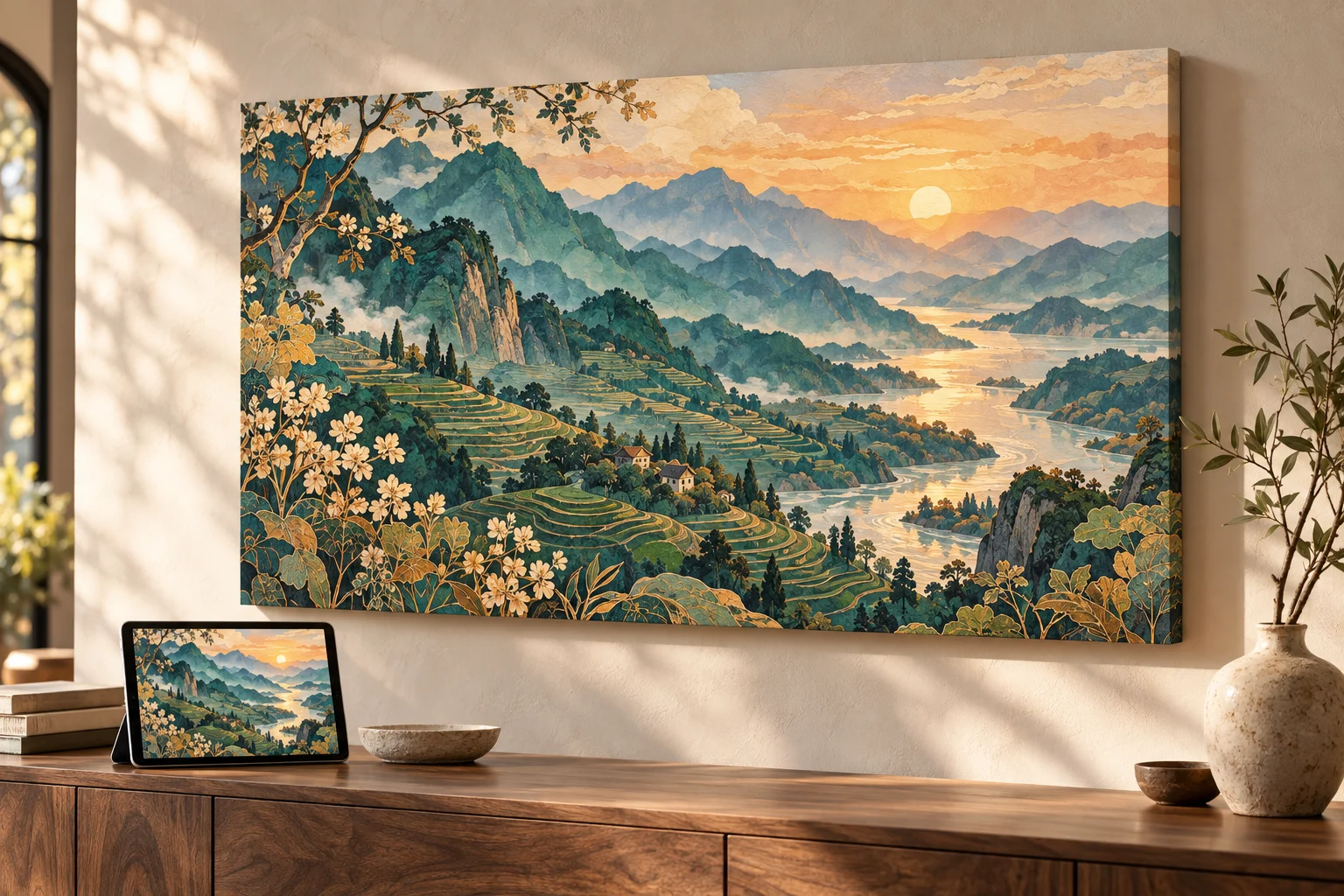
The product determines the image shape automatically, but composition still matters. Ask for a centered subject on a phone case, edge-to-edge pattern on a mug, or broad visual depth for a landscape canvas.
Change one thing when revising
If the first result is close, avoid rewriting everything. Change the color palette, simplify the background, adjust the mood, or make the subject larger. Small revisions make it easier to understand what improved the image.
Keep a reusable starting structure
[subject], [action or pose], [visual style], [setting], [mood and color], [composition]The structure is only a starting point. Once the central visual idea is clear, natural language works well.